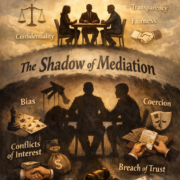
The Shadow of Mediation: Mediator Ethics, Perception, and the Quiet Risk of Post-Mediation Interactions
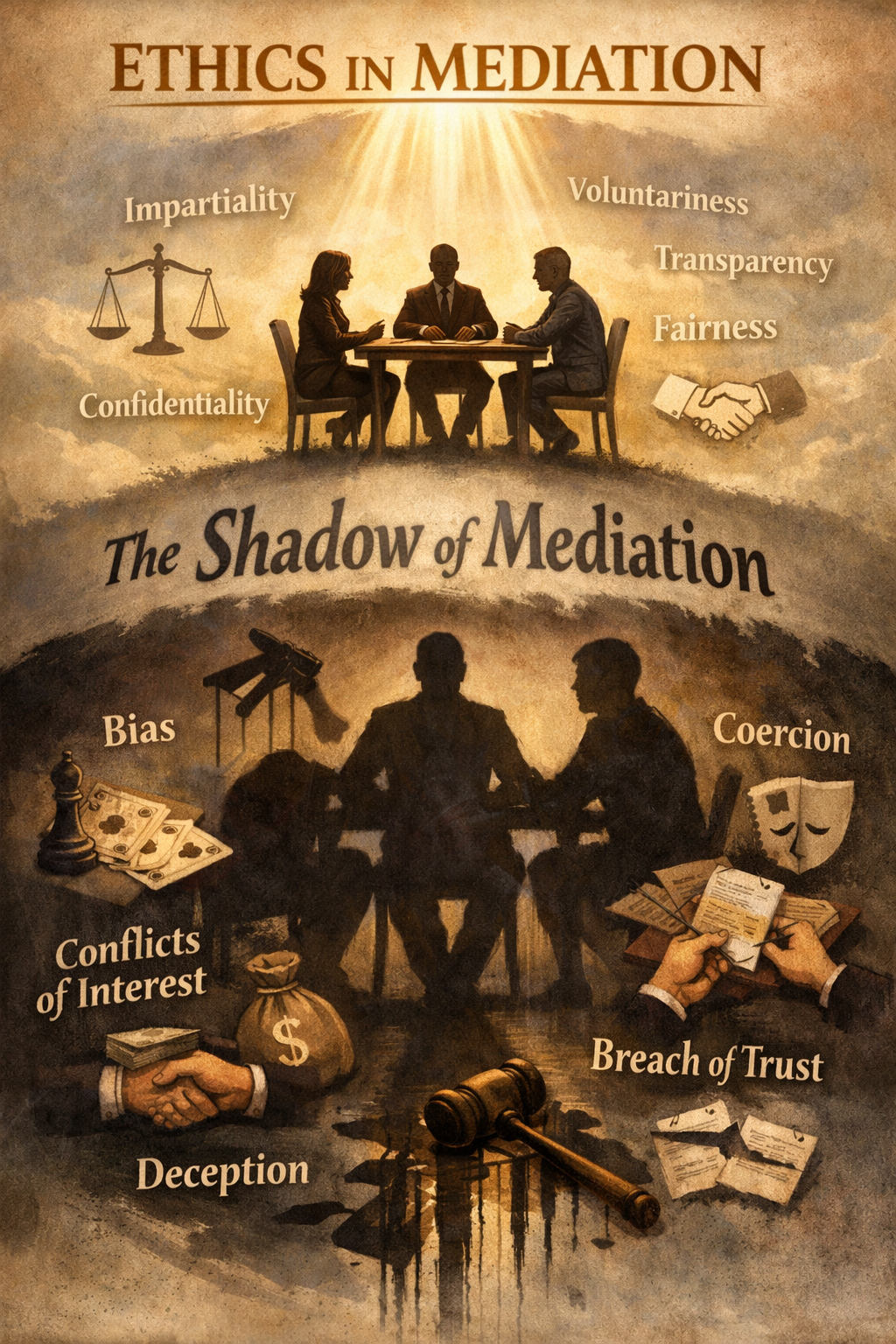
Mediation does not always end when the parties leave the room. Sometimes it lingers in follow-up emails, chance encounters at bar events, LinkedIn connections, referrals, post-settlement clarification calls, or even casual comments made months later. This lingering presence is what can be called the “shadow of mediation.” It is the ethical space where perception matters as much as reality. For mediators and neutrals, especially those operating within structured ethical frameworks such as the Florida Rules for Certified and Court-Appointed Mediators, the greatest risk is often not overt misconduct — it is the appearance of bias created unintentionally after the case concludes.
- The Ethical Foundation: Impartiality Beyond the Session
Under Florida Rule 10.330, impartiality means freedom from favoritism or bias in word, action, or appearance. appearance, and includes a commitment to assist all parties, as opposed to any one individual. The rule is not limited to what occurs during the mediation session itself. It extends to conduct that could undermine public confidence in neutrality. Similarly, Rule 10.340 (Conflicts of Interest) and Rule 10.370 (Authority and Professional Advice) reinforce a mediator’s obligation to avoid actions that could compromise neutrality or party self-determination. The key phrase embedded throughout mediator ethics is not simply actual bias, but the appearance of partiality. The shadow forms when conduct, even if innocent, creates doubt.
II. The “Shadow” Defined
The shadow of mediation refers to post-mediation conduct that:
- Creates a perception that the mediator favors one party or counsel
- Suggests confidential information influenced later interactions
- Implies a continuing advisory or strategic role
- Undermines the mediator’s neutrality in future related matters
It is subtle. Often unintentional. Sometimes If not always, social.
But perception drives trust — and mediation depends entirely on trust.
III. Cautionary Tales: Where Shadows Begin
1. The Post-Settlement Strategy Conversation
A mediator runs into defense counsel at a CLE event. The lawyer casually says, “Thanks for pushing the plaintiff hard on damages — that helped.”
The mediator responds with a smile: “I knew they were overvaluing the case.”
Even if said jokingly, the comment can be interpreted as alignment with one side’s strategy. If repeated, it could undermine future mediations involving that counsel or opposing parties.
Avoidance Strategy: Do not characterize your mediation moves in partisan terms. Neutral responses protect neutrality.
2. Social Media Proximity
After mediating a contentious commercial dispute, the mediator connects on LinkedIn with only one side’s counsel and later comments publicly on that attorney’s litigation victories.
The opposing side sees the visible online interaction.
Perception shifts.
Avoidance Strategy: Apply consistent professional boundaries across parties. If connecting online, consider balanced professional conduct or simply refrain.
3. Post-Mediation Clarification That Becomes Advice
A party calls the mediator months later asking: “Can you look at this enforcement issue? What do you think the judge would do?” If the mediator begins offering predictive legal analysis, especially favoring one party’s enforcement position, the line between neutral facilitator and advisor blurs. Rule 10.370 warns against providing professional opinion that overrides self-determination or suggests alignment.
Avoidance Strategy: Redirect parties to independent counsel. Provide process clarification, not substantive advocacy or predictive opinion.
4. Subsequent Representation in Related Matters
A mediator is later asked to serve as consultant or expert witness for one party in a related dispute arising from the mediated case. Even if technically permissible under certain conditions, the optics are dangerous. Confidential knowledge — even if not used — creates unavoidable appearance concerns.
Avoidance Strategy: Decline roles that derive from knowledge gained during mediation unless clear ethical authority and full informed consent exist — and even then, consider the reputational cost.
5. Casual Commentary About Parties
Statements such as:
- “That plaintiff was impossible.”
- “Defense counsel always lowballs.”
- “I had to reality-check him.”
Even when anonymized, these comments can signal alignment, disclose confidential impressions, or diminish party dignity.
The shadow deepens when mediators speak too freely.
IV. Why Appearance Matters More Than Intent
Mediators often defend themselves by saying:
- “I wasn’t biased.”
- “Both attorneys/parties asked, so I provide both of them expected as I have the experience, training and expertise.”
- “That’s not what I meant.”
- “It was just a joke.”
Intent does not govern perception.
Public confidence in mediation rests on the belief that the neutral is, and remains, neutral. When appearance erodes, the process erodes.
Ethical discipline therefore requires restraint not only in conduct but in proximity.
V. Practical Guardrails to Avoid the Shadow
1. Adopt a Post-Case Neutrality Protocol
- No strategic debriefs with one side.
- No characterization of party performance.
- No predictive analysis favoring one party.
- No selective social media engagement tied to the case.
2. Standardize Your Responses
Develop neutral phrases such as:
- “My role was to assist both parties in evaluating options.”
- “The resolution resulted from the parties’ own decision-making.”
- “I cannot comment on party positions or strategy.”
Consistency protects you.
3. Maintain Equal Professional Distance
Familiarity is not favoritism — but unequal familiarity creates perception.
Be aware of optics:
- Who sees your public affiliations?
- Be continuously aware of your body-language/behavior.
- Who perceives your endorsements?
- Who hears your praise?
4. Reflect Before Accepting Related Engagements
Ask:
- Would a reasonable observer question my neutrality?
- Could this create the appearance that confidential knowledge influenced my new role?
- Would I be comfortable if this appeared in a grievance complaint?
If hesitation exists, the shadow already exists.
VI. The Ethical Discipline of Silence
Sometimes the most powerful ethical tool a mediator possesses is silence.
Silence after the session.
Silence about party strategy.
Silence about impressions.
Silence about perceived weaknesses.
The shadow shrinks when the mediator’s footprint remains light.
VII. Conclusion: Neutrality Extends Beyond the Room
Mediation is built on credibility.
Credibility is built on impartiality.
Impartiality requires vigilance — not only during caucus, not only during negotiation — but in the weeks, months, and professional interactions that follow.
The shadow of mediation is not misconduct.
It is risk. And ethical excellence requires not only avoiding actual bias, but guarding against its appearance — even when no one is watching.