
Beyond the Gray: Why Alternative Dispute Resolution Must Evolve Through Intention-Trained[1] Conflict-Resolution Practitioners
A Companion Reflection of Reimagining the Neutral: From Legal Retiree to Conflict-Resolution Practitioner
By: Stanley Zamor
The conversation around the “graying” of Alternative Dispute Resolution (ADR) is not merely about age, it is about pipeline, identity, and professional evolution. ADR, at its core, was never meant to be an extension of litigation. It was designed as something fundamentally different, a system where process, dialogue, and human dynamics take precedence over positional advocacy and adversarial wins. Yet today, the field remains heavily populated, and often dominated by retired judges and seasoned litigators. While their legal acumen experience is valuable, the question must be asked:
Is ADR being practiced as it was intended—or simply repackaged litigation in softer clothing?
What ADR and Mediation Actually Require
At its highest level, ADR is not about law—it is about managing perspectives/personalities and conflict-discourse.
The process demands:
- Deep understanding of conflict dynamics,
- Mastery of communication systems and human behavior,
- Skills in de-escalation, reframing, and emotional intelligence,
- The ability to design and guide a structured yet flexible process,
Mediation, in particular, is not decision-making; it is process design and facilitation. It is about helping parties move from:
- Positions → Interests
- Reaction → Reflection
- Conflict → Resolution
This requires more than legal knowledge. It requires intentional training in conflict analysis and resolution.
The Missing Professional Class in ADR
Here is the uncomfortable truth; ADR has underutilized the very professionals who are academically and practically trained to do this work. Graduates from programs in Conflict Analysis and Resolution (CAR)—such as those offered by Nova Southeastern University’s School of Social and Systemic Studies or Pepperdine’s Master of Dispute Resolution (MDR)—are specifically educated in:
- Systems thinking and conflict mapping
- Negotiation theory and applied practice
- Peace studies and human systems design
- Organizational Development and Design
- Cultural competency and power dynamics
- Facilitation, mediation, ombuds and dialogue communication-processes.
These are not incidental skills. No is innately born with these skills and the techniques to understand when/how to use them. These skills from a soft science can hit the hardest of resolution marks when wielded by a trainer and “ethical” neutral. They are the core competencies of effective ethical neutrals.
A graduate degree, master’s degree or PhD in dispute resolution, for example, is designed to teach conflict dynamics, negotiation strategies, and sustainable resolution models across industries—precisely the skillset ADR demands.
Yet, these professionals remain underrepresented in court rosters, lawyer preferred lists, mediation panels, and institutional ADR systems.
The Structural Problem: How ADR Selects Its Neutrals
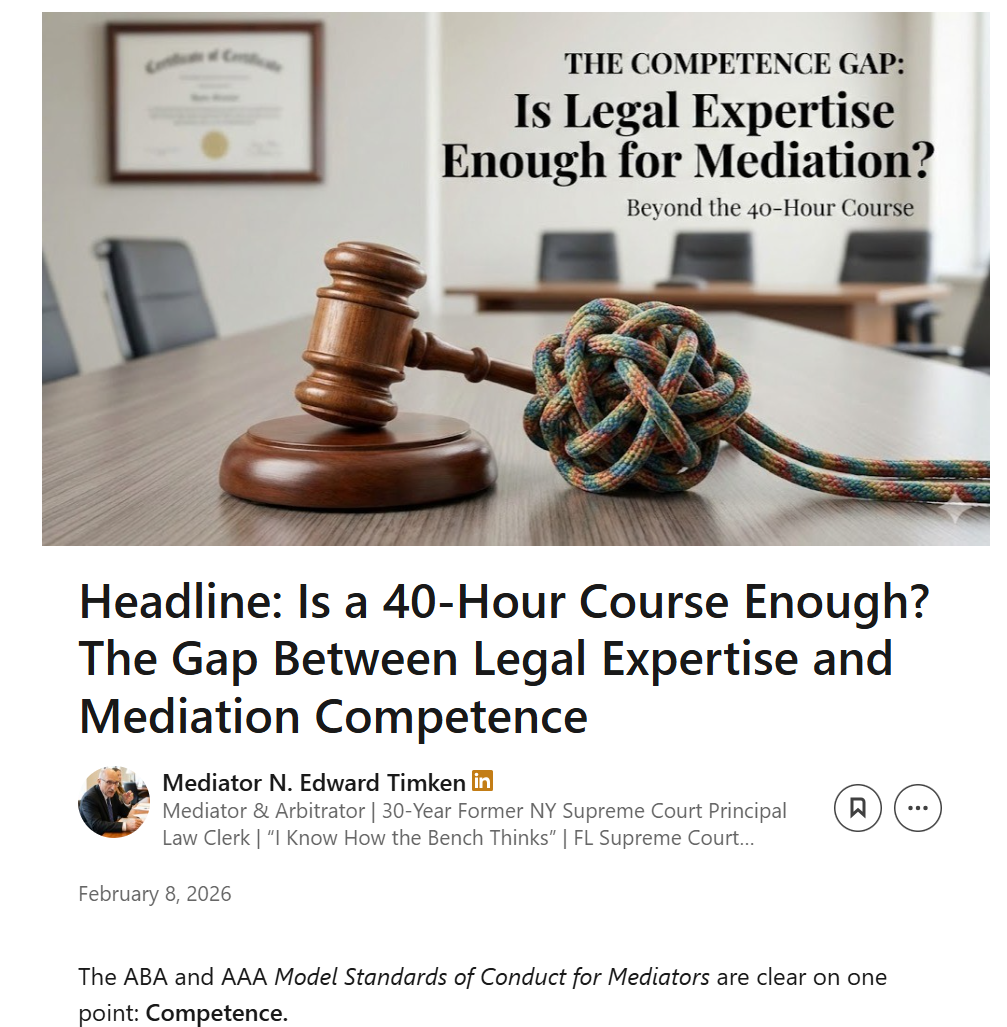
In an article written by Nelson Edward Timken “The Graying of Alternative Dispute Resolution: Do Bar Association Sponsorships of Institutional Providers Stifle Professional Growth and Diversity?”, he eludes that the current ADR ecosystem largely selects neutrals based on:
- Years in litigation,
- Judicial experience,
- Subject-matter expertise.
What it often overlooks are:
- Formal training in conflict resolution systems,
- Competency in the human-condition and human-centered process design,
- Skill in navigating psychological and emotional barriers
- the ability to provide a flexible process where disputants can exercise self-determination, empowerment, while free to create/explore alternatives.
This creates a paradox: The field designed to move beyond litigation continues to be staffed primarily by those trained and conditioned within it. And the skills they are primarily conditioned to use, and limited by, are adversarial in approach, tone and context.
What Nelson Edward Timken Identifies—And What Must Follow
Nelson Edward Timken’s observations about the “graying” of ADR highlight a critical concern: the sustainability and evolution of the profession. But the issue is not simply generational, it is directional. His article, “The Graying of Alternative Dispute Resolution: Do Bar Association Sponsorships of Institutional Providers Stifle Professional Growth and Diversity?” firmly notes the future of ADR should not just be young lawyers transitioning/building their book of business and navigating the gatekeepers of Bar Associations and exiting neutrals. The ADR industry is better served if it actively includes those who are intentional-trained neutrals.
The Case for Conflict-Resolution Educated Practitioners
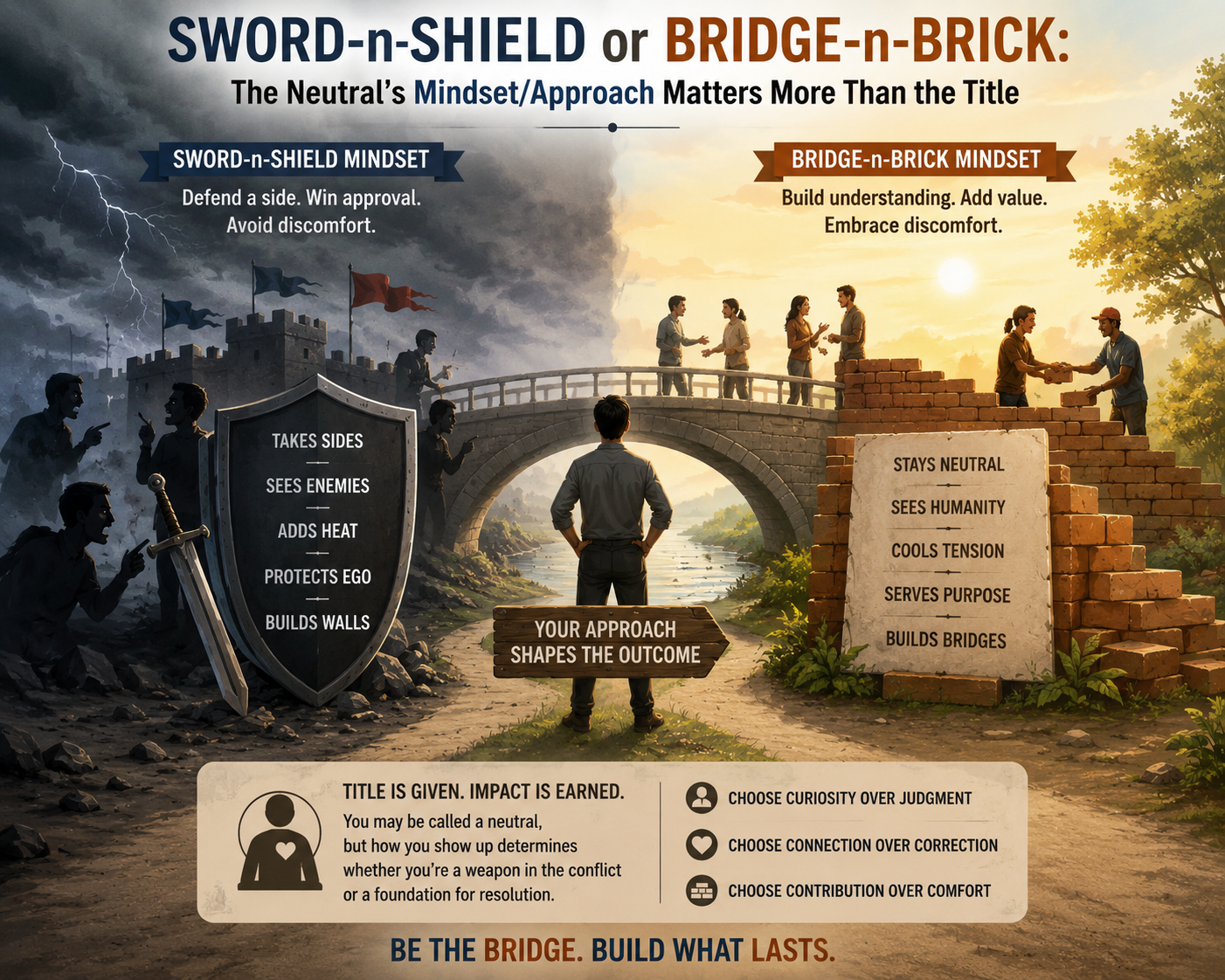
Integrating CAR-trained professionals into ADR is not about exclusion, it is about expansion and elevation. These practitioners bring:
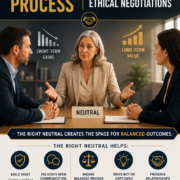
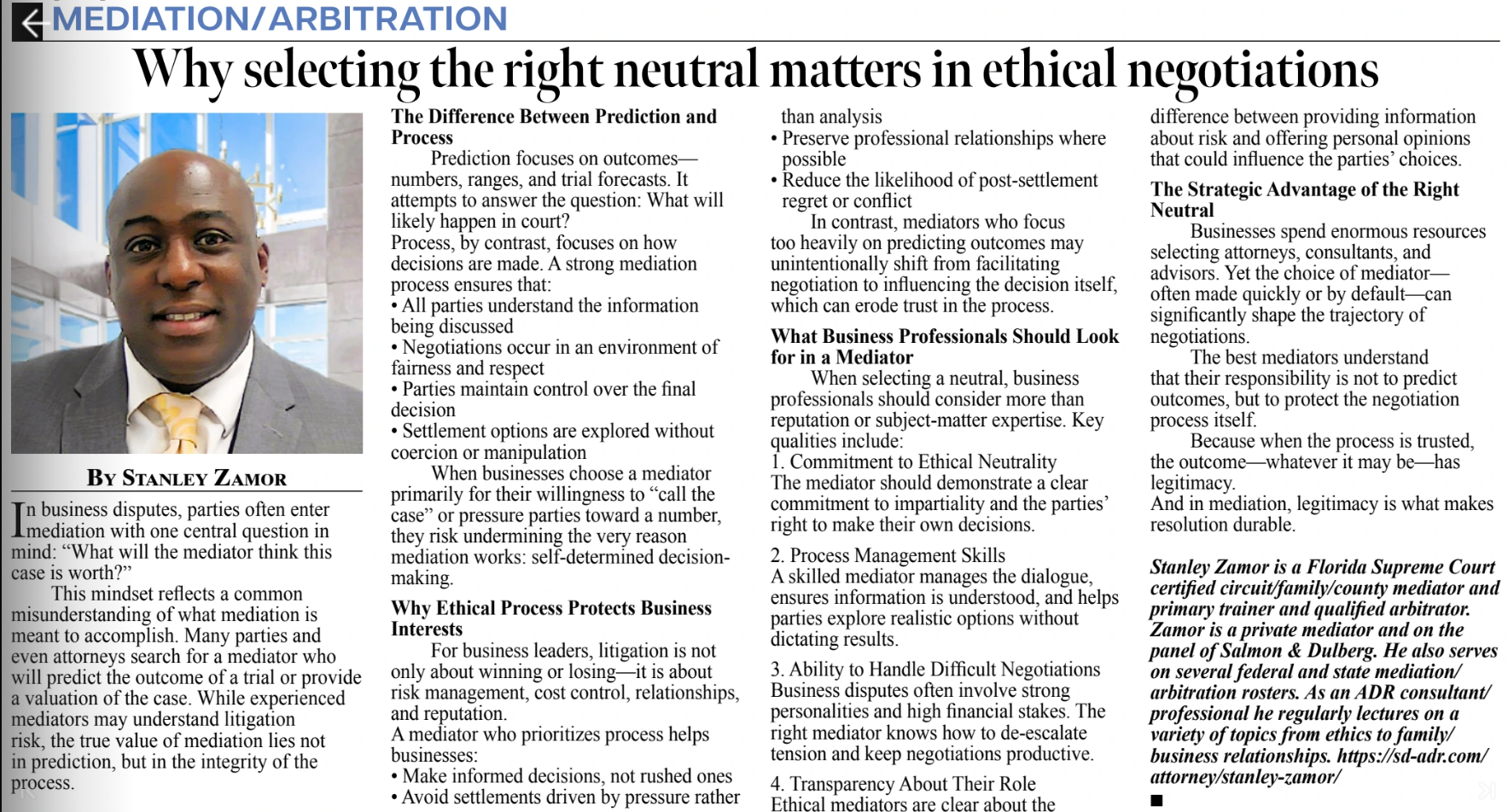
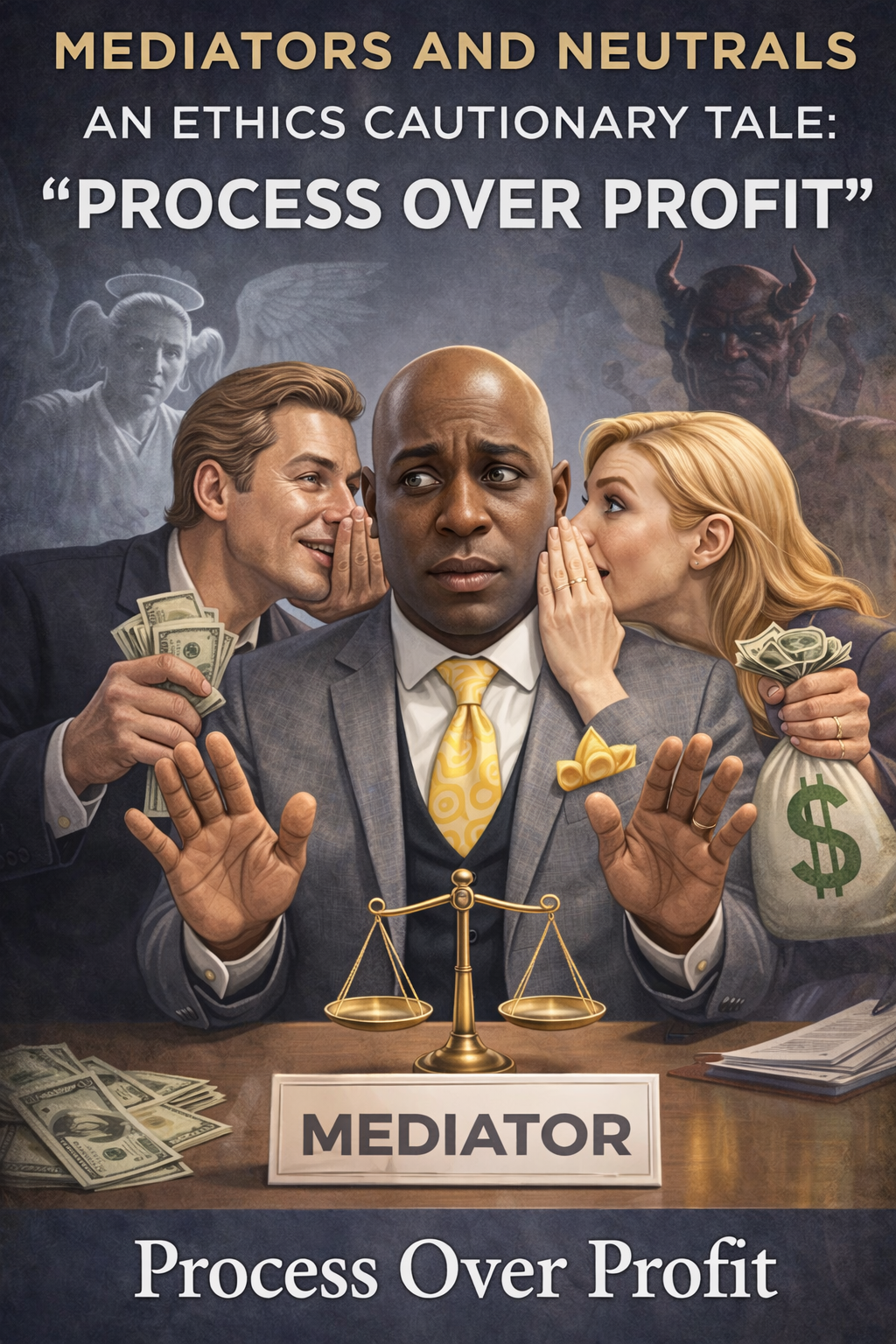
1. Process Integrity Over Outcome Pressure (“Process over Profit”[1] mentality)
They are trained to protect the process itself, not just drive settlement numbers.
2. Advanced Conflict Diagnostics
They can identify (not predict):
- Hidden interests
- Power imbalances
- Systemic barriers to agreement
3. Human-Centered Mediation
They understand that disputes are not just legal, they are:
- Emotional
- Relational
- Cultural
- Natural and normal
4. Adaptive Communication Strategies
They move beyond shuttle diplomacy into:
- Dialogue facilitation
- Narrative reframing
- Meaning-making conversations
A Hybrid Future: Where Law Meets Conflict Science
The answer is not to replace lawyer-mediators. The answer is to rebalance the field.
Imagine an ADR ecosystem where:
- Lawyers bring legal clarity and advocacy
- Judges bring evaluative perspective and finality
- CAR professionals bring collaboration, consensus, process integrity, self-determination, and empowerment within the human condition.
That is not fragmentation—that is evolution and the fulfilling the promise of ADR.
A Call to Action: Redefining Competency in ADR
If ADR is to remain credible, ethical, and effective, institutions- Gate Keepers must:
- Expand mediator qualification pathways beyond legal backgrounds
- Safeguard and put guard rails protecting those engaged in the varying ADR processes
- Encourage and Integrate CAR degree holders into court and private panels
- Reevaluate what “competency” truly means in ADR and mediation
- Invest in interdisciplinary training models
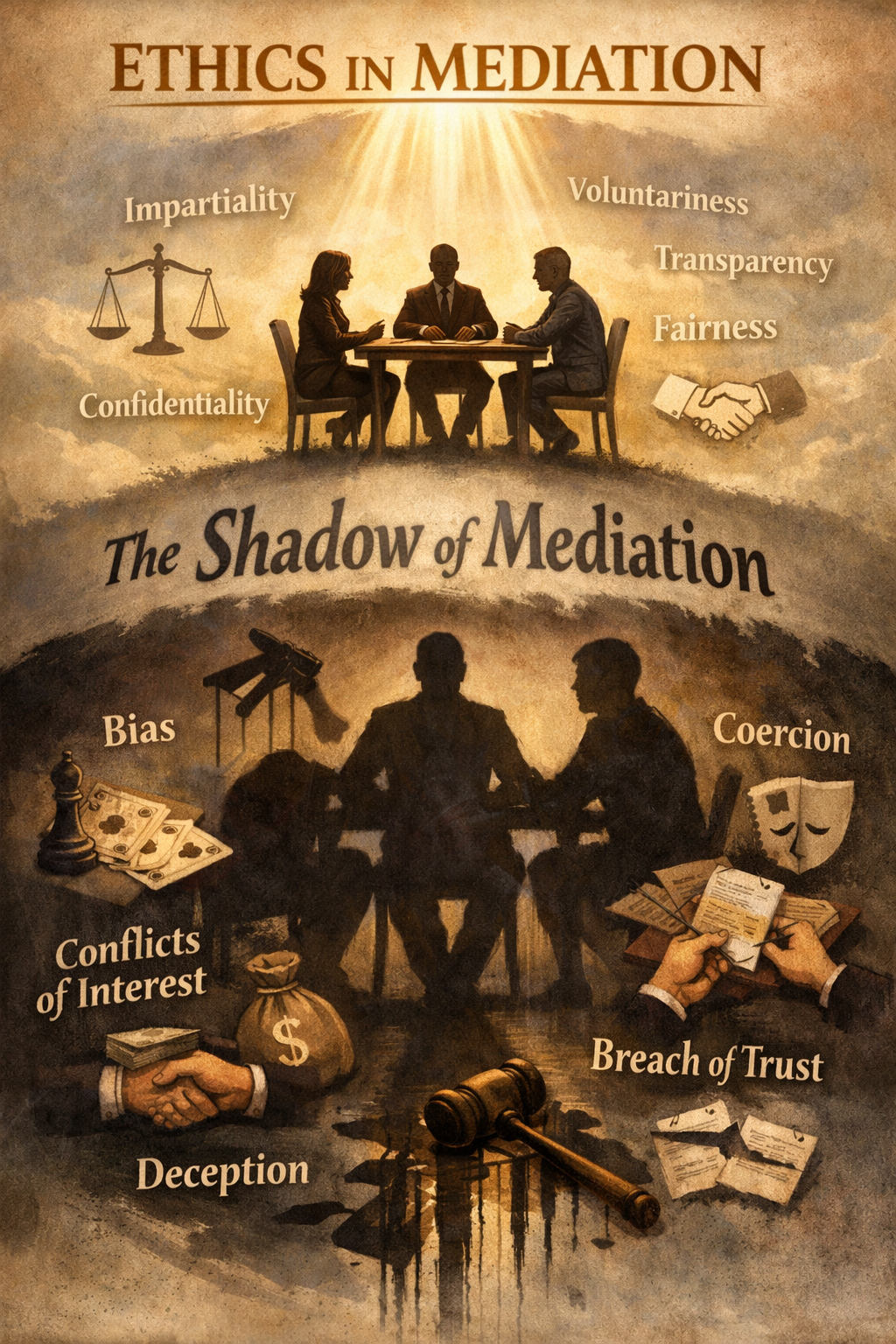
- Increase disciplinary actions against those willfully continuing unethical neutral practices
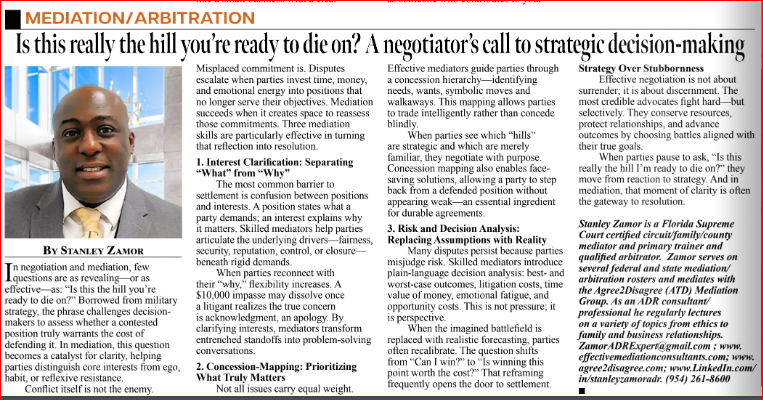
Because the future neutral should not only be experienced, but they must also promote the use and understanding of a process that safeguards those who must live with the consequences/decisions of the outcome. Stanley Zamor is a Florida Supreme Court Certified Circuit/Family/County Mediator, Primary Trainer and Qualified Arbitrator. Mr. Zamor serves on several federal and state mediation/arbitration rosters and mediates with Salmon and Dulberg. As an ADR consultant/professional he regularly lectures on a variety of topics from ethics to Family/Business relationships. ZamorADRExpert@gmail.com ; www.effectivemediationconsultants.com; www.LinkedIn.com/in/stanleyzamoradr. (954) 261-8600
[1] Intention-Trained Neutrals I postulate are ADR practitioners who have receive advanced and/or formal training within the field of Behavioral Sciences, Conflict Analysis and Resolutions, Peace Studies and other like disciplines. They often, but are not limited, to have earned a graduate certificate, a Master’s Degree, and/or PhD in an Conflict Resolution focused degree.
[2] Stanley Zamor has created and produced Advanced Negotiation & Mediation Advocacy seminars regarding his “Process over Profit” mindset. He has a Youtube.com channel and created some social media postings introducing the “Process over Profit” mindset and approach to negotiations.