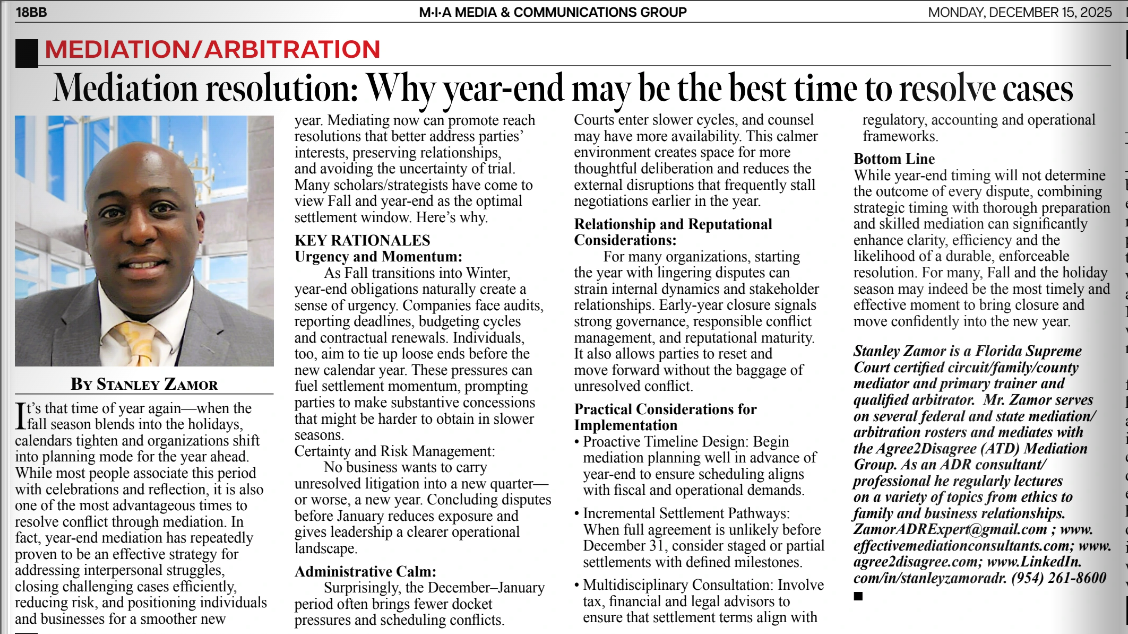

NO, There is no debate or R.I.P To A Paradigm
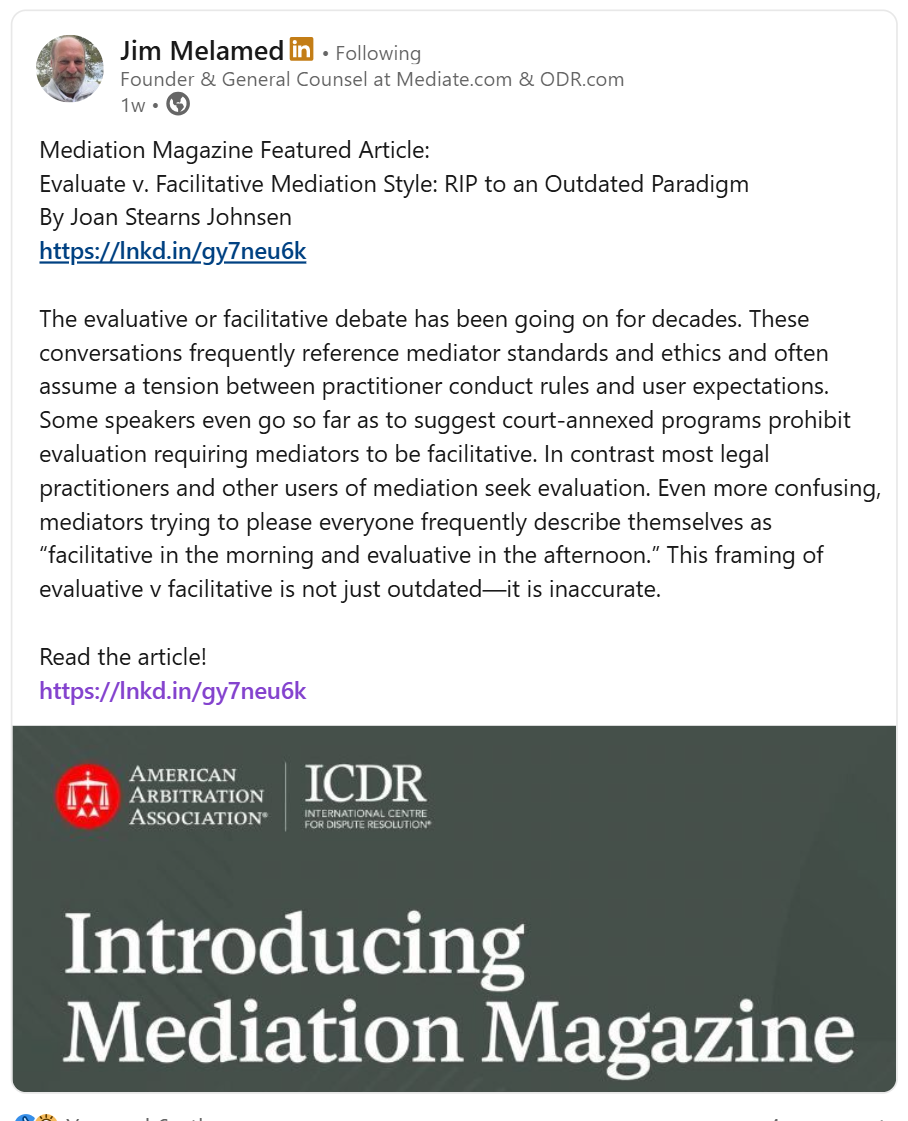
Bravo!!! I’m glad to see another voice weighing in on this discussion (see the Jim Melamed LinkedIn post below). However, I would have liked mentioned what happens to mediators disciplined when they provide evaluative methods. There is no debate I see. And no death of a paradigm. Though the orinigal AAA Magazine article (see the link below above the Jim Melamed post) mentions how Rule 10.370(c) seems to support the evaluative approach. Yet, if you review the complaints/disciplinary action taken against mediators who provide an evaluative approach—whether or not the parties request it—mediators can face disciplinary complaints, especially if what the mediator offers isn’t aligned with what the parties/their advocates want to hear. This creates a cautionary tale for mediators: they must carefully consider their mediation style and the potential ethical implications. There is not no debate here.
To navigate this, mediators should rely on a deeper knowledge of conflict resolution training, skills/techniques and a solid understanding of various mediation approaches (there are four primary styles often cited in practice). By being proficient in multiple approaches, mediators can tailor their method to the situation—staying balanced and party-centered while remaining mindful of ethical boundaries and rules.
Key points to emphasize:
The ongoing debate, from what I see, stems in part from the fact that many mediators DO NOT have comprehensive, deep training in conflict resolution, leading them to fall back on familiar skills of another primary profession.
The choice between evaluative and facilitative approaches isn’t just a stylistic preference; it has real ethical and disciplinary implications depending on the context.
A mediator’s ability to switch among approaches—facilitative, narrative, evaluative, transformative, and other nuanced methods—should be grounded in thorough training and ongoing professional development.
Practitioners should exercise caution, document their approach, and ensure alignment with the parties’ goals (not theirs) and applicable rules to minimize risk of complaints or discipline.
A frequent, yet not mentioned driver of the debate is the ego of the mediator who wants every case to settle in a way they believe in. This conviction—an inclination to steer outcomes toward what the mediator thinks is best—can color which approach is used and how negotiations unfold. When mediators push for a particular settlement outcome, it can blur the line between helpful guidance and overreach, potentially triggering ethical concerns or complaints, especially if the approach is invoked without clear consent or alignment with the parties’ stated goals.
For practitioners, this underscores the importance of: Maintaining self-awareness about personal biases and professional motivations. Selecting and articulating an approach transparently, with the parties’ informed consent. Documenting the reasoning behind the chosen method and any shifts in approach as negotiations evolve. Ensuring alignment with the parties’ objectives and applicable rules to reduce the risk of complaints or discipline.
Thank you Jim Melamed for sharing and your efforts to enhance the field of ADR.
CLICK HERE READ THE ORIGINAL AAA MAGAZINE FEATURED ARTICLE
FURTHER COMMENTS CLICK HERE: